
Ancient Foundations
The region has been home to sophisticated civilizations for thousands of years. The Pyu, Mon, Bamar, and other peoples built cities, traded across Asia, and developed rich literary, artistic, and religious traditions. The Bagan kingdom, which flourished from the ninth to the thirteenth centuries, left thousands of Buddhist temples and monuments across central Myanmar.
British Colonial Rule
Britain took control of Burma through three wars during the nineteenth century and completed its annexation in 1885. Colonial rule reshaped the economy, dismantled traditional institutions, and intensified tensions among ethnic and religious communities. It also helped give rise to student movements and a growing demand for independence.
The Arrival of Christianity
Adoniram Judson graduated as valedictorian from Brown University in 1807 and delivered a commencement address called "An Oration on Free Enquiry" — he was an agnostic. A friendship with a brilliant skeptic named Jacob Eames had pulled him away from the faith of his childhood. But when Eames died suddenly at an inn where Judson was staying, Judson found himself unable to walk away from the questions. He entered seminary, and within months was committed to overseas mission. He and his peers petitioned their church with such conviction that it led to the founding of the first American foreign mission society. He had planned to go to India. He chose Burma instead — one of the most closed, most unreached countries in the world.
His ship was captured by a French privateer en route. He married Ann Hasseltine, and together they reached Rangoon in 1813. He spent years learning Burmese — a tonal, script-based language with no Western analog — before he could preach at all. Six years passed before he baptized a single convert, a Burmese man named Maung Naw, in 1819. Then came arrest. The British-Burmese War made him a suspected spy. He spent 17 months in Ava prison under brutal conditions — Ann stood at the prison gates each day to negotiate his survival, smuggling his Burmese Bible manuscript to safety by sewing it into his pillow. Ann died in 1826. Their infant daughter died six months later. He buried both. He stayed. He completed his Burmese Bible translation in 1835 — it is still in use today. He died at sea in 1850, leaving behind 63 churches and 7,000 converts.
Among those he discipled was Ko Tha Byu, a Karen man who came into his household as a servant and came to faith there. Ko Tha Byu became an evangelist to his own people, and the Karen church multiplied — without a foreign missionary directing it. Ko Tha Byu died in 1840. Judson outlived him. The Kachin and Chin peoples would encounter the Gospel after Judson's death, in 1877 and 1904, and carry it the same way. The church that grew from his work is an indigenous church. It has survived British colonialism, military dictatorship, and ethnic conflict. Since the coup of 2021, displacement, blocked aid, and bombed schools have not ended it — they have deepened it. The faith of Myanmar's Christians was not built on comfort. We stand today with people who have suffered for the Gospel and watched it thrive.
Independence and Fragility
Aung San, the leading architect of modern Burma's independence, negotiated with Britain and worked toward an agreement among the country's ethnic groups. He was assassinated in 1947, months before independence.
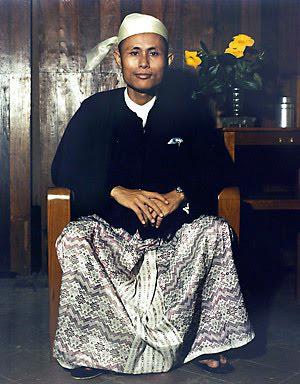
Burma became independent on January 4, 1948. The new country had elections, a free press, and a lively civil society, but it also faced armed uprisings and unresolved questions about ethnic autonomy.
Military Rule
In 1962, General Ne Win seized power. The military closed Parliament, suppressed dissent, nationalized industries, and isolated the country under the "Burmese Way to Socialism." A once-promising economy deteriorated, universities were repeatedly restricted, and ethnic minority regions endured continuing military campaigns.
The Democracy Movement
In 1988, students, monks, workers, and families filled the streets in a nationwide uprising. The military killed thousands and retained power. During the movement, Aung San Suu Kyi—daughter of Aung San—emerged as a central democratic leader.
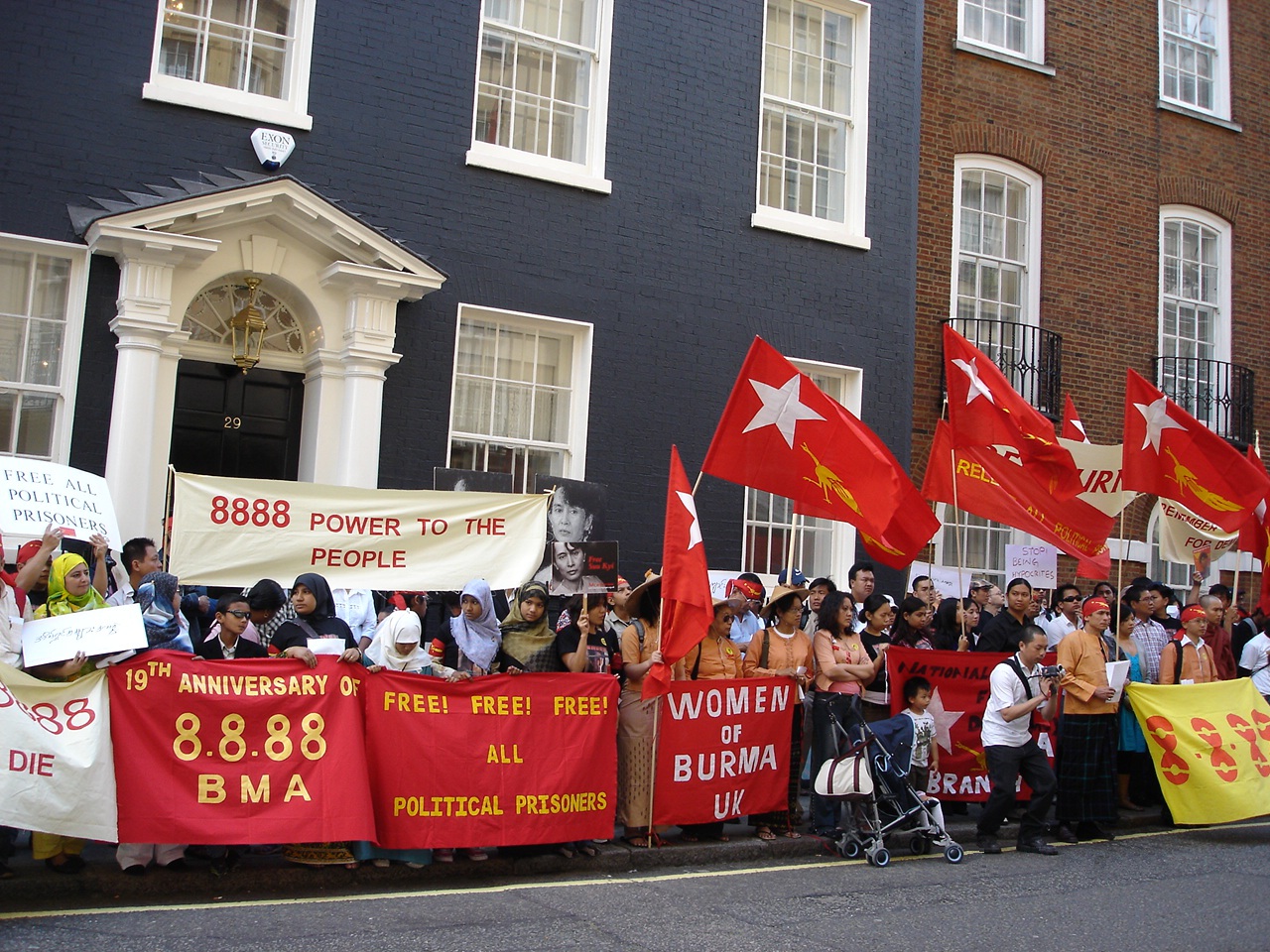
Her National League for Democracy won the 1990 election by a landslide, but the military refused to transfer power. Suu Kyi spent much of the next two decades under house arrest. Buddhist monks led another major protest in 2007, known as the Saffron Revolution; it too was suppressed.

A Brief Democratic Opening
Beginning around 2010, the military allowed limited reforms. Suu Kyi was released, censorship eased, and the country opened to greater investment and communication. The National League for Democracy won a historic election in 2015 and another landslide in November 2020.
The transition remained incomplete. The military retained guaranteed parliamentary seats and control of powerful ministries. Ethnic conflicts continued, and the military's 2017 campaign against the Rohingya brought worldwide condemnation.
On February 1, 2021—the day the newly elected Parliament was scheduled to convene—the military seized power again.
The Truth to Remember
The coup did not end a settled democracy. It destroyed a fragile opening for which generations had sacrificed. That history helps explain both the grief that followed and the determination with which so many citizens responded.